
Open education has won more than it sometimes admits. That is why its next challenge is harder. The open education movement can be understood as a series of big leaps, each opening something the system had kept closed.
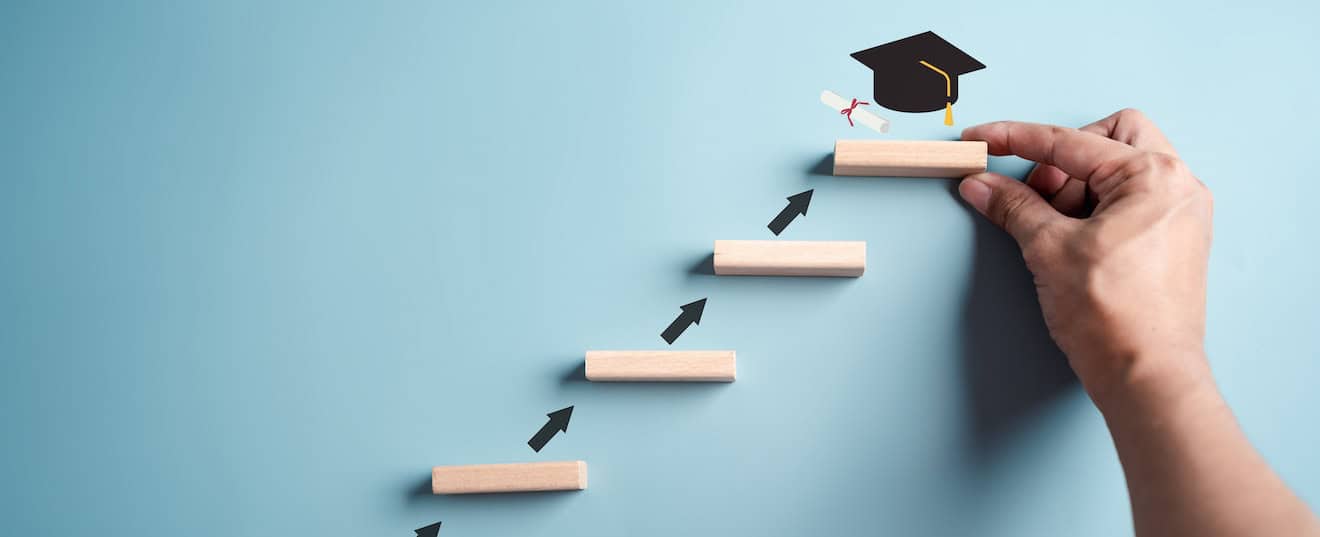
First, open education changed who could get in. Then it changed what learners could access. Then it changed how learners could take part. Now it must change what learners can show.
The first age: Who gets in.
This age opened the institution. Its roots reach back to the University of South Africa (UNISA), an early pioneer of distance education at university level. Its most visible symbol is the founding of the Open University in the UK in 1969, which admitted its first students in 1971 and showed clearly that a university could be built around the learner’s circumstances rather than the other way around. The idea then took root across the world, from Athabasca University in Canada and Québec’s Université TÉLUQ to the Open University of China, the Indira Gandhi National Open University in India, the Open University of Catalonia and other national and regional open universities. They shared one radical idea: people should not be excluded from higher education because of age, gender, geography, work, family responsibility, language, income or distance from an institution. What this age changed was who could enrol, and on what terms.
The second age: What Learners Access.
This age opened the content. In 2001, the Massachusetts Institute of Technology announced that it would publish its course materials openly. The following year, a UNESCO forum gave the practice its name: open educational resources. Over the next decade, a global community built the licenses, sites and networks that made sharing possible, from the Cape Town Declaration of 2007 to the rise of open online courses. Alongside it, the open access movement pulled scholarship out from behind subscription paywalls. These efforts were different, but they asked the same question: who could reach, use, adapt and share what education teaches.
The third age: How Learners Take Part.
This age opened the work of teaching and learning. Open pedagogy, often discussed as open educational practice, asked teachers to treat openness not as a property of files but as a way of working. It invited students to help make, question and share knowledge rather than only receive it. The point was participation. It remains unfinished, but it belongs to the same story because it, too, is an act of opening.
Across these three ages, higher education repeatedly found ways to surmount major obstacles by opening what had previously been closed to many learners: admission, materials, knowledge and participation. Each age expanded access in a different way. But that success has moved the problem rather than solved it. In an age when AI can generate explanations, summarize complex ideas, translate content and help learners move more quickly through the early stages of understanding, access to information is no longer the central challenge it once was. The harder question now is what learners can actually do with what they know, and whether that learning can be recognized, trusted and rewarded by others. This is where the fourth age begins.
The fourth age: What Learners Can Show.
The hard question now is whether learning becomes something others can recognize, rely on and reward.
Graduates of schools, colleges and universities struggle to turn learning into a foothold in work. Employers struggle to find the skills and judgment they need when there are so many credentials in circulation. The public promise of more education does not always show up clearly in better work or stronger organizations. These strains were visible before generative AI arrived, and they have causes that predate it. AI sharpens the contradiction. It speeds up the early stages of learning, reduces some beginner work, and unsettles the assessment on which the later stages have always depended. AI is the accelerant of the fourth age, not its origin.
The work now is not to widen the front door of the system, but to make a much stronger connection between what learners can do and the recognition of what they can do. This follows the same instinct that drove the first three ages: removing what stands between people and what learning was meant to deliver. Only now, the obstacle has moved. The first three ages helped more people reach higher education and take part in it. The fourth is about what happens next: whether the learning people gain can be recognized, trusted and used beyond the institution.
We should recognize this shift and act on it. Unlike the earlier ages, this one cannot unfold slowly. The first steps that once helped beginners learn the work are being weakened or removed faster than anything is replacing them. Every year of delay means fewer people will have skills others can trust. The people best placed to take up the work are those who already know how to open what others assumed must stay closed.
Five shifts may help.
- Acknowledge the progress, then measure what matters next. We should still value resources shared and learners enrolled, but we also need to measure what happens next: whether learning becomes something people can use, show and get recognized.
- Let’s design the system, not blame the learner. The route from learning to skills others can trust cannot be left to individuals to figure out alone. Learners, employers, professional bodies and communities need to build that path together.
- Let’s rebuild the first rung. Beginners need supervised work through which they become confident contributors. If beginner roles are disappearing or changing, that learning has to be created somewhere else, through shared responsibility, paid placements, supervised projects and stronger links between study and work.
- Let’s make recognition easier to carry and easier to trust. Learners need trusted proof of what they can do: clear records they control, plain ways of describing what they can do, and ways for others to rely on what learners show without asking them to prove everything again.
- Let’s make the system work for every learner. If only some people can turn learning into trusted skill, the work of opening education is not finished. We need to measure who benefits and who is left out, and design for the newcomer, the first-generation learner, the Indigenous learner and the mid-career returner.
Learning is easier to reach than ever. The harder question now is whether students can show what they can do, and whether others will recognize it. That is what open education must take on next.