
For most of human history, the best way to learn anything was to be rich. Alexander the Great had Aristotle. The children of merchants and aristocrats had governesses, masters and private tutors. Everyone else shared one teacher among 30 or 40 learners and made do — not because anyone believed this was the best way to learn, but because it was the only teaching process society could afford.
We have known for a long time exactly how much that compromise costs. In 1984, the educational researcher Benjamin Bloom measured what parents of tutored children had always suspected: Students taught one-to-one, with the tutor adjusting to their pace and insisting on mastery before moving on, performed about two standard deviations better than students in a conventional classroom — well enough that the average tutored student outperformed 98 per cent of their conventionally taught peers.
Bloom called it the two-sigma problem. The difficulty was that one-to-one tutoring could not be provided at scale. No public system could put a patient, capable tutor beside every learner. For 40 years, Bloom’s finding showed what was possible, but the cost kept it beyond the reach of most learners.
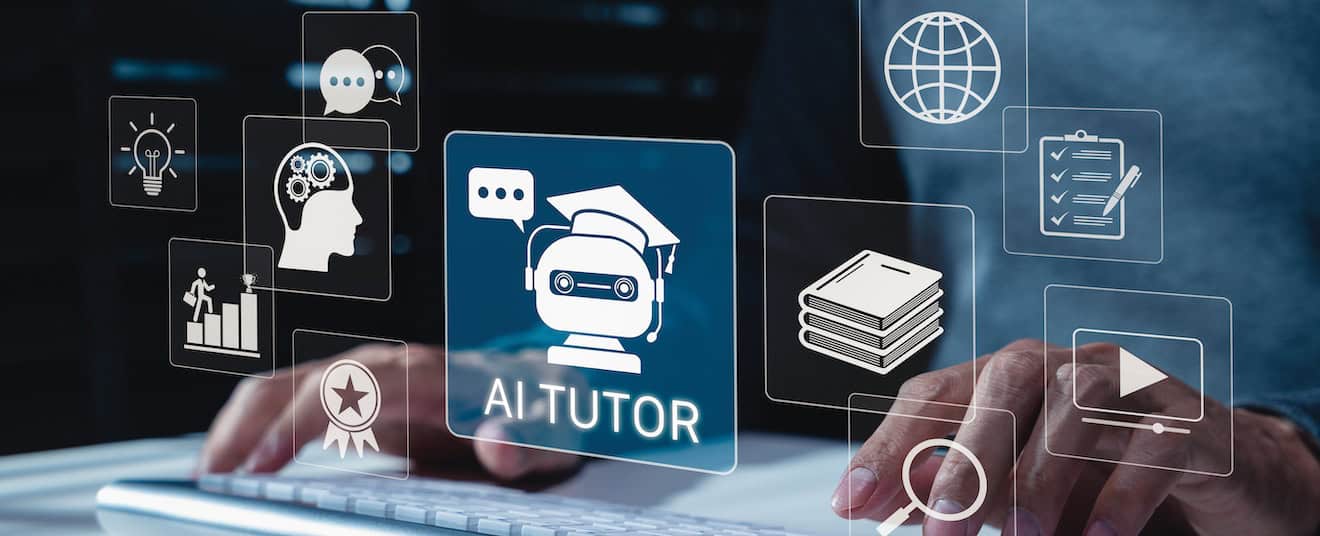
AI may now make something close to that level of individual support widely available. For the first time in history, something close to personal tutoring is available to anyone, on nearly anything at any level, at whatever your life allows, at a very low marginal cost. Whatever else this technological moment brings, this development deserves attention: Individualized learning support may no longer have to remain scarce.
Four people, 11 o’clock
Consider four people, all of them learning tonight.
A newcomer finishing a warehouse shift practises English with an AI tutor that will repeat the same job interview as many times as that newcomer needs. When a grammar rule refuses to make sense, the explanation arrives in the learner’s first language. There is no one to be embarrassed in front of, which — ask any adult who has learned a new language — is half the battle.
A fourth-year apprentice preparing for his certification exam finally asks the question he has been avoiding for three years, the one he could never ask on site because a journeyperson was watching and the question just felt too basic. He gets an answer, then a follow-up, then a worked problem, at six in the morning before his shift.
A 47-year-old mother of three, back in formal study for the first time in a quarter-century, meets the parametric statistics course she has been dreading. She goes slowly. She repeats things. She asks the same question four different ways until one of the ways works. No cohort is watching her struggle. as her confidence grows, she begins to make progress in statistics.
The owner of a small bakery, who employs six people and can’t leave the shop for a course, works through payroll rules and tax issues as well as export paperwork after closing — learning in short sessions, after closing, on a schedule that fits her business and family responsibilities.
What these four examples have in common is not the technology itself. In each case, the barriers that fell were human ones: cost, scheduling, crowding in class and, perhaps most underestimated, embarrassment. many learners have gone without help because getting it cost money, took time a teacher didn’t have or risked embarrassment. AI can reduce some of those barriers and make it easier to ask for help.
What teachers gain
It would be easy to tell this story as a threat, and several have done so. But Bloom’s research points in a different direction. His tutors were teachers. His finding was never that teaching mattered less, but that teachers had been rationed — one shared among dozens, with no time to adjust, revisit or insist on mastery for each learner. Scarcity was the challenge, especially at scale. The effectiveness of the teacher was central to the result.
The honest question we need to explore is not whether an abundant tutor replaces the teacher. It’s more about how teaching changes when students can rehearse, repeat material and ask basic questions outside class.
Every educator knows the frustration of watching a learner fall behind quietly, needing 20 minutes of patient one-to-one that a room of 135 will never permit. If the 20 minutes can now happen elsewhere, the hours together change. Teachers can spend more time noticing who is discouraged, connecting learning to a student’s circumstances and providing encouragement while maintaining clear standards. An AI tutor can explain material, but a teacher helps students see its relevance, persist through difficulty and feel that they belong The reality is that greater access to individual practice may give teachers more time for that human work.
What abundance doesn’t solve
The benefits should not be overstated: Making tutoring widely available addresses the supply of support, but access alone doesn’t ensure learning. Support that is available is not the same as support that is accessed and valued. The newcomer needs a connection and a device, the apprentice needs to know the help exists, the returning student needs the confidence to begin. These are unevenly distributed in ways that track every inequality Canada already has: the northern community still waiting for reliable broadband, the shift worker whose only computer is a phone, the adult whose last memory of a classroom is one of failure.
If the benefits reach mainly those who are already well served, existing inequalities may widen. Early evidence suggests this is exactly what is happening.
Also true is the fact that an AI tutor can’t give a learner a reason to persist. Purpose, belonging, aspiration — the sense that the effort is leading somewhere and that someone cares whether you arrive — still come from people. AI can support practice; people remain essential to motivation, belonging and persistence.
The question worth asking now
For generations, the central question of learning support was brutally simple: Who gets help? The answer, mostly, was whoever could afford it, plus whoever was lucky in their allocation of crowded classrooms and overstretched teachers. Many others studied alone at kitchen tables or before exams, often leaving important questions unasked.
AI tutoring changes the question we need to ask. If something close to a personal tutor is available to essentially everyone, then what matters is no longer who can afford help but who actually receives it — the shift worker, the apprentice, the returning student, the owner-operator — and what changes in a country when the mechanic’s daughter in Fort McMurray has the same patient tutor as the banker’s son in Rosedale. Bloom’s two-sigma problem was about the scarcity of individual tutoring. The opportunity now is to ensure learners who have rarely had such support can use it effectively.
The potential is significant: More learners may be able to ask questions, receive timely explanations and practise when it suits them. Whether that potential is realized will depend on access, thoughtful use and continued human support.
Source
This commentary draws on: Benjamin S. Bloom, The 2 Sigma Problem: The Search for Methods of Group Instruction as Effective as One-to-One Tutoring (Educational Researcher, 1984), and ongoing research on AI-enabled tutoring and learning support.